
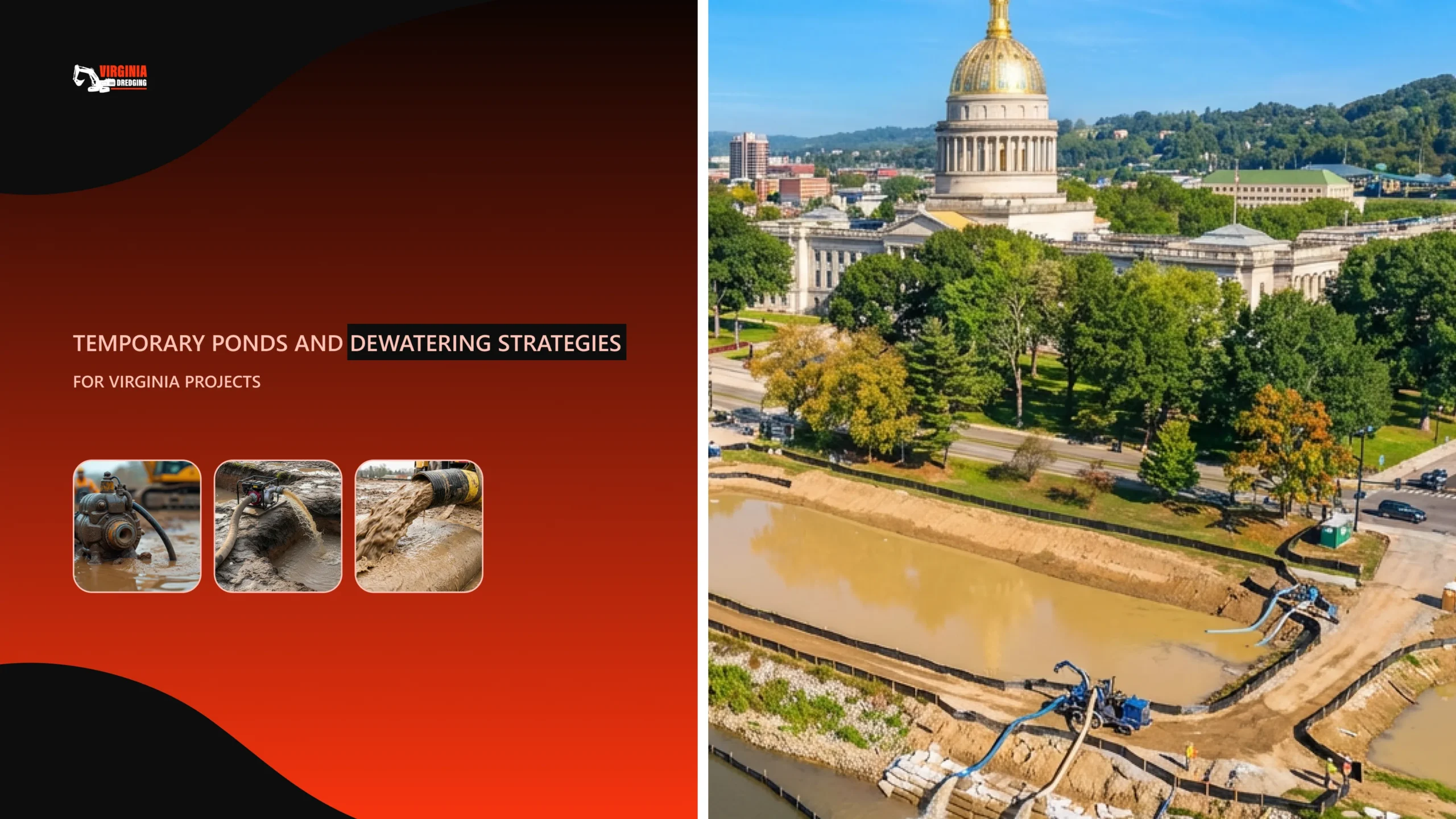
Across the Commonwealth, effective water management is a key factor in whether construction and infrastructure projects stay on schedule. From Piedmont clay soils to the low-lying coastal plains that drain into the Chesapeake Bay watershed, Virginia dewatering projects require careful planning. Seasonal rainfall, shallow groundwater, and strict environmental oversight mean water cannot be treated as an afterthought. It must be managed deliberately, responsibly, and with local conditions in mind.
Temporary ponds play a critical role in that process. They create space to control water, allow sediment to settle, and protect downstream waterways. When paired with practical pumping and monitoring methods, they help contractors keep sites dry while meeting regulatory expectations.
Virginia Dredging has built a strong reputation by addressing these realities head-on. Their work across public and private sites reflects a deep understanding of how temporary ponds, dewatering practices, and sediment control come together on real Virginia job sites. This article explores how Virginia dewatering projects benefit from well-designed temporary ponds, outlines effective approaches used across the state, and provides practical guidance rooted in local experience.
What Is Temporary Pond Dewatering?
Concept and Function
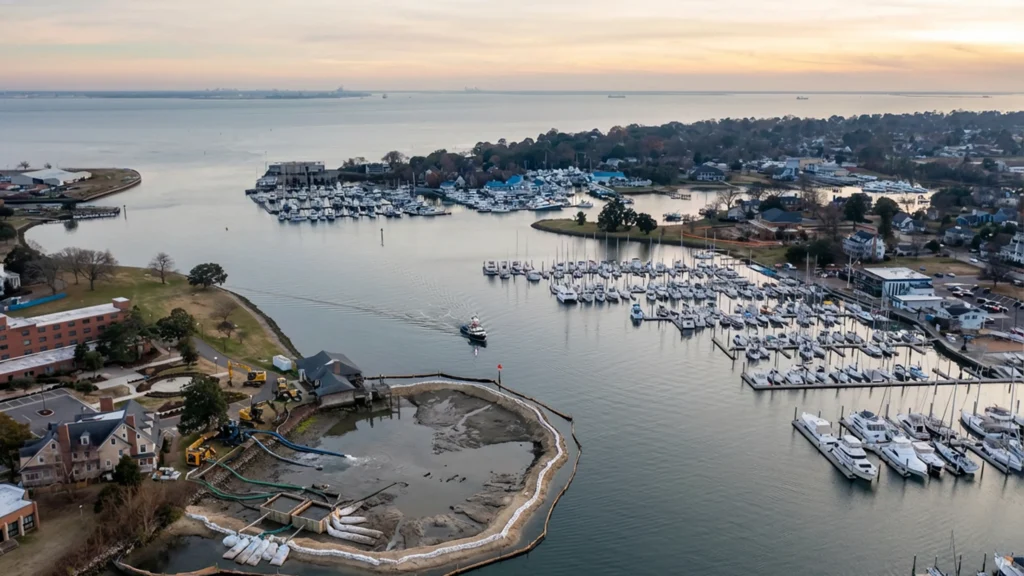
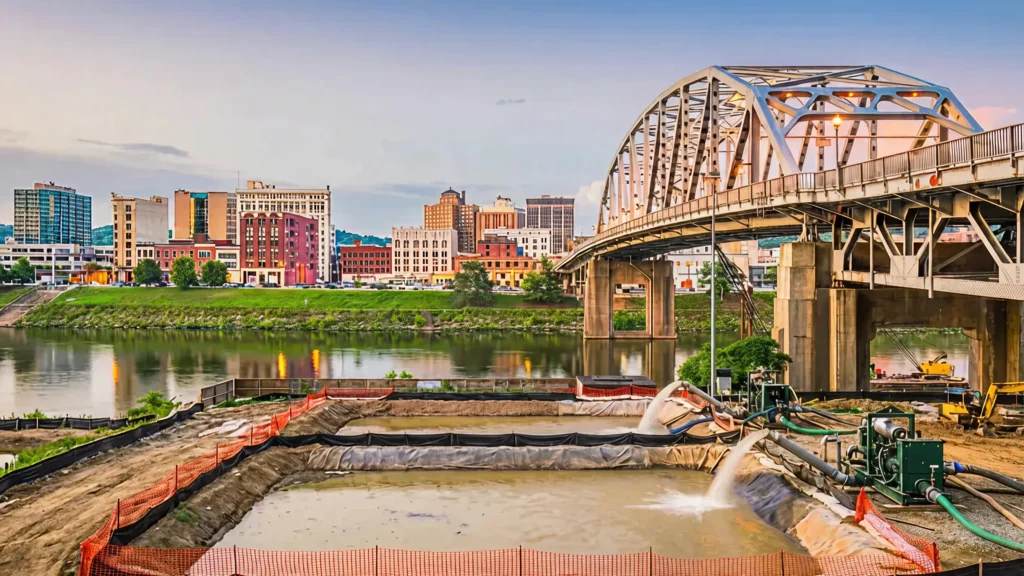
Temporary pond dewatering refers to the controlled removal of water from excavations, basins, or low areas using ponds designed for short-term use. These ponds are not permanent stormwater facilities. They are designed to manage water during active construction, dredging, or rehabilitation, and are removed or restored once the project is complete.
The main function of temporary pond dewatering is to create a buffer between disturbed soil and the surrounding environment. Water entering the pond slows down, allowing heavier sediment to settle before discharge. This reduces turbidity and protects receiving streams and drainage systems.
Unlike permanent wet ponds, temporary basins are sized and shaped based on project duration, soil conditions, and expected inflows. They are flexible tools that support Virginia dewatering projects where conditions change as excavation progresses.
Typical Uses in Virginia Projects
Temporary ponds are used throughout the state in a wide range of applications:
- Road and utility excavations where groundwater or stormwater accumulates
- Habitat restoration projects in wetlands and tidal zones
- Sediment basins required for stormwater compliance
- Pond rehabilitation work, such as municipal improvements, including projects similar in scope to Ashby Pond upgrades in Fairfax County
In each case, temporary pond dewatering supports safe access, reduces environmental risk, and keeps work moving.
Virginia Regulatory and Environmental Context
Clean Water Act and Permitting Considerations
Dewatering activities often fall under the scope of the Clean Water Act, particularly when dredged material or discharge enters waters of the United States. Section 404 permits govern dredge-and-fill activities, while discharge quality is regulated under separate provisions.
For Virginia dewatering projects, this means water leaving a temporary pond must meet quality standards. Sediment control is not optional. Temporary ponds serve as a first line of defense in meeting these obligations.
Dewatering Regulations Specific to Virginia
Virginia Water Protection regulations outline expectations for dewatering areas, including containment methods such as earthen berms and filter fabric. These rules emphasize preventing sediment-laden water from leaving the site untreated.
VDOT guidance also informs construction dewatering strategies for transportation projects. Plans must document how water will be handled, where it will be discharged, and how sediment will be controlled throughout construction.

Local Stormwater Management Specs
Local jurisdictions often adopt stormwater manuals that distinguish between permanent wet ponds and temporary dewatering ponds. While permanent ponds focus on long-term runoff control, temporary ponds are evaluated based on their ability to safely manage construction-phase water.
Understanding these distinctions is essential for successful Virginia dewatering projects.
Strategic Planning for Temporary Ponds on Virginia Job Sites
Site Assessment and Geotechnical Considerations
Every effective dewatering plan starts with understanding the site. Soil type, groundwater depth, and rainfall patterns vary widely across Virginia. Clay-heavy soils in Northern Virginia behave differently from sandy coastal soils near Hampton Roads.
These factors influence how quickly water enters a pond, how well sediment settles, and how often pumping is required. Thoughtful planning reduces surprises and improves the performance of temporary pond dewatering.
Designing Temporary Pond Dewatering Systems
Key design elements include:
- Stable embankments sized for expected flows
- Inlet zones that slow the incoming water
- Outlet structures that prevent erosion
- Clearly defined discharge points
Ponds must be sized to allow adequate retention time. Rushing water through a pond defeats its purpose and undermines construction dewatering strategies intended to ensure compliance.
Integration with Erosion and Sediment Control Plans
Temporary ponds do not stand alone. They work in tandem with silt fences, sediment traps, and stabilized construction entrances. Together, these measures form a cohesive system that supports Virginia dewatering projects from start to finish.
Construction Dewatering Strategies Used in Virginia
Gravity Filtration and Settlement Ponds
Gravity-based settlement remains one of the most reliable approaches. Water enters the pond, slows, and naturally releases sediment. This simple method is often the backbone of temporary pond dewatering on Virginia sites.
Pumping and Dewatering Equipment
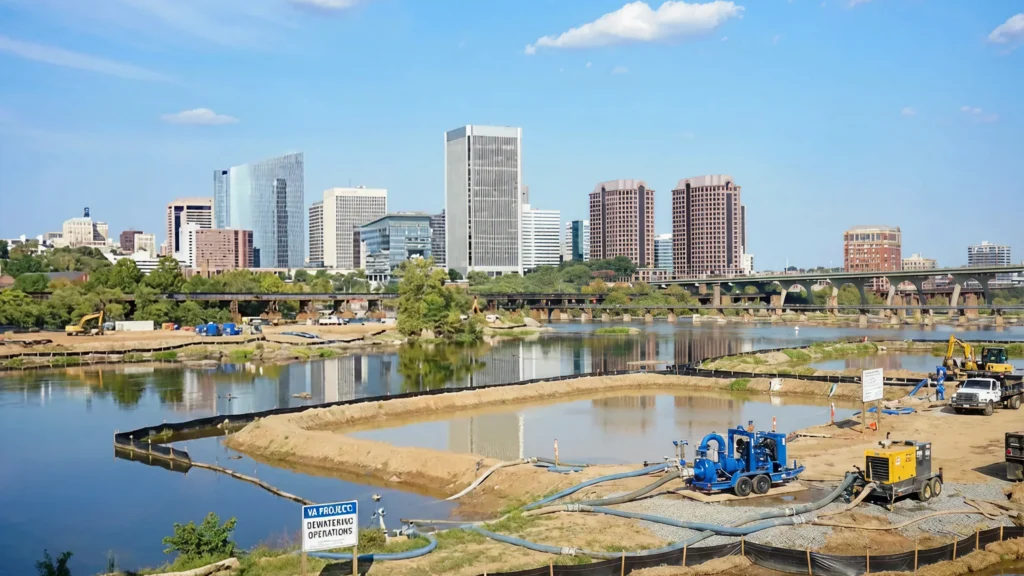
When gravity alone is not enough, pumps move water from excavations to ponds or treatment areas. Equipment selection depends on flow rates, solids content, and site layout.
Vacuum-assisted systems and controlled pumping setups are common components of construction dewatering strategies used alongside temporary ponds.
Innovative Approaches: Geotextile and Mechanical Solutions
Geotextile tubes and portable solids-handling systems provide additional treatment when space is limited or sediment loads are high. These solutions complement ponds rather than replace them, enhancing the efficiency of temporary pond dewatering.
Case Example: Constructing a Temporary Dewatering Pond
On a typical Virginia dewatering project, a temporary pond may be excavated near the work area, lined or stabilized, and connected to pumps drawing water from the excavation. Sediment settles in stages, water is monitored, and discharge is adjusted as conditions change. This practical approach reflects lessons learned across many Virginia sites.
Optimizing Dewatering for Construction Projects in Virginia
Effective dewatering is not just about removing water. It is about timing, consistency, and minimizing disruption to surrounding land and waterways. In Virginia dewatering projects, optimization often determines whether a project progresses smoothly or faces repeated delays.
Scheduling Around Virginia Weather Patterns
Virginia’s climate presents unique challenges. Spring storms, summer downpours, and occasional tropical systems can quickly overwhelm poorly planned dewatering systems. Temporary ponds must be sized and positioned with these weather patterns in mind.
Successful temporary pond dewatering plans account for rainfall intensity, runoff from adjacent areas, and how quickly water levels can rise during storms. Building additional freeboard into ponds and staging pumps before wet periods reduces the need for emergency response and keeps crews productive.
Minimizing Downtime and Environmental Impact
Downtime often results from sediment issues, failed inspections, or unplanned flooding. Properly managed ponds help prevent all three. Clear inlet zones, stabilized embankments, and controlled discharge points limit sediment movement.
Well-executed construction dewatering strategies also reduce environmental impact. Slowing water flow allows sediment to settle naturally, which protects nearby streams and stormwater systems. This proactive approach helps projects remain compliant and avoids corrective actions that can stall work.
Monitoring and Maintenance
Temporary ponds require routine oversight. Daily visual checks, especially after rainfall, help identify erosion, sediment buildup, or discharge issues early. Adjustments to pumping rates or pond configuration are often minor but make a significant difference.
Consistent monitoring ensures that temporary pond dewatering systems continue to support Virginia dewatering projects from excavation through final restoration.
Environmental and Sustainability Considerations
Environmental stewardship is a central concern in Virginia, particularly in areas connected to the Chesapeake Bay watershed. Dewatering practices must balance construction needs with long-term protection of water quality.
Eco-Friendly Pond Dewatering
Temporary ponds reduce direct discharge from disturbed soils, thereby limiting downstream sediment and nutrient loading. This is especially important near wetlands, streams, and tidal waters.
By integrating ponds into broader construction dewatering strategies, contractors reduce erosion risk and support habitat protection. These practices align with state and local expectations and reflect responsible land management.
Reuse and Water Recycling
In some Virginia dewatering projects, treated water can be reused on site. Applications may include dust suppression, soil conditioning, or equipment cleaning. Reuse reduces demand on local water supplies and maximizes the value of temporary pond dewatering systems.
Sustainable reuse also demonstrates environmental awareness, which is increasingly important for public and municipal projects across the Commonwealth.
Local Virginia Examples and Applications
Temporary ponds are used across Virginia in both urban and rural settings. Each application reflects local soil conditions, land use, and regulatory priorities.
In Northern Virginia, projects such as the Ashby Pond improvements in Fairfax County demonstrate that sediment removal and controlled dewatering improve water quality and extend pond service life. These efforts support flood control and pollutant-reduction goals under regional stormwater programs.
Across growing developments in Loudoun and Prince William counties, temporary pond dewatering supports grading and utility installation while meeting local sediment control standards.
In coastal areas such as Hampton Roads, Virginia, dewatering projects must account for tidal influence and shallow groundwater. Temporary ponds provide essential buffering capacity, protecting sensitive waterways connected to the Chesapeake Bay.
These examples highlight how adaptable construction dewatering strategies are applied across diverse Virginia landscapes.
Why Partner with Virginia Dredging for Temporary Pond Dewatering
Choosing the right partner is critical when water management affects both schedule and compliance. Experience, local knowledge, and practical execution set trusted providers apart.
Company Expertise
Virginia Dredging brings decades of experience working across Virginia’s varied terrain. Their understanding of soils, groundwater behavior, and permitting expectations strengthens every Virginia dewatering project they support.
Tailored Solutions and Advanced Equipment
No two sites are the same. Virginia Dredging designs temporary ponds based on actual field conditions rather than templates. Their approach integrates sediment control, pumping solutions, and adaptable layouts that support effective temporary pond dewatering throughout construction.
Regulatory Support and Compliance
Navigating permits and inspections can be complex. Virginia Dredging assists clients with documentation, best practices, and on-site adjustments that keep construction dewatering strategies aligned with state and local requirements.
Setting the Standard for Effective Dewatering in Virginia
Temporary ponds play a vital role in managing water on active job sites. When properly designed and maintained, they protect water quality, support regulatory compliance, and keep projects moving forward.
For Virginia dewatering projects, success depends on understanding local conditions, planning for weather, and using proven construction dewatering strategies that prioritize sediment control. Temporary pond dewatering remains one of the most reliable tools for achieving these goals.
Virginia Dredging remains a trusted partner for projects across the Commonwealth, offering practical solutions grounded in experience and local insight. Contact Virginia Dredging to discuss temporary pond planning, dewatering strategy design, and compliance support tailored to your Virginia project.